
Barbershop Culture in Texas: The Last Great Third Place
Stepping Into a Third Place: The Feel of the Barbershop Chair
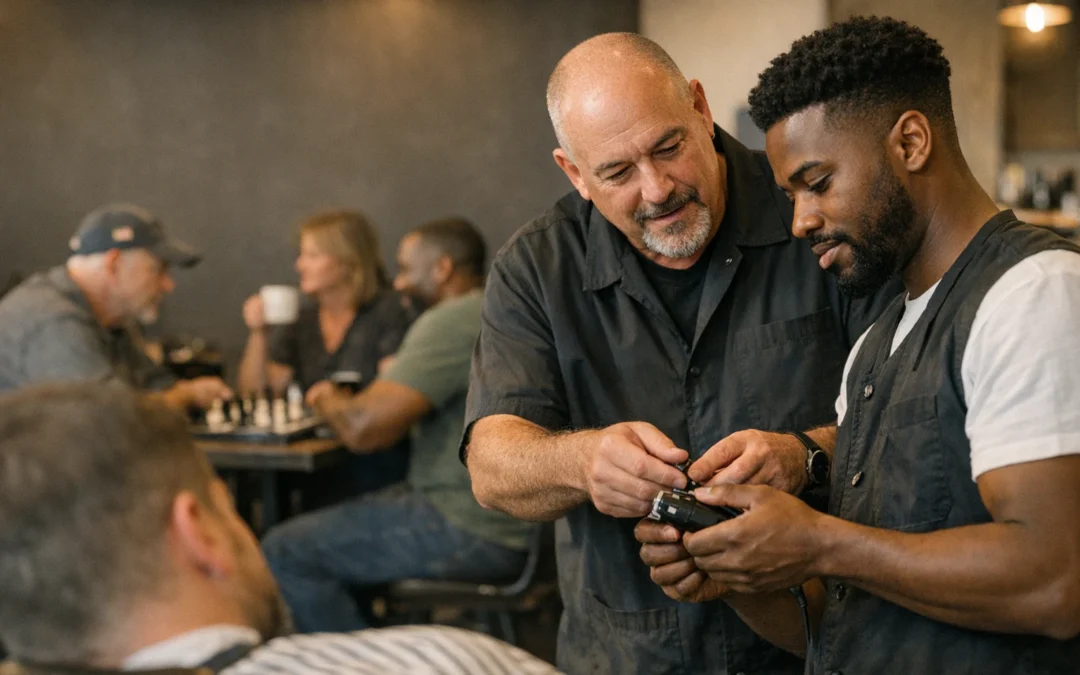
Barbershop culture in Texas has always understood something most modern spaces have forgotten: not every visit needs a reason. In a good shop, time moves differently. The door swings open, the clippers buzz, and conversations stack on top of the music. You greet people you know and people you almost know. In that moment, the barbershop feels less like an errand and more like coming home.
Sociologists call this kind of space a “third place.” It is not your house and not your job. It is where you show up as yourself, on your own time, without an appointment to be anything other than who you are. The cut matters, yes, but the room around the chair matters just as much.
In many neighborhoods, regulars show up early and stay even after their cut is done. They trade stories about traffic, local sports, and how the heat hit different this summer. Teenagers listen in and learn the unspoken rules.
A Public Living Room
When you think about it that way, the barbershop is less a business and more a public living room. The clippers and combs are tools, but so are jokes, side comments, and quiet nods in the mirror. That mix of routine and surprise is the heart of a true third place.
What a Third Place Really Means in Everyday Life
Ray Oldenburg, the American sociologist who coined the term in 1989, used “third place” to describe informal public spaces where people gather outside home and work. He defined it as a place that hosts “the regular, voluntary, informal, and happily anticipated gatherings of individuals beyond the realms of home and work.”
Classic examples include neighborhood diners, corner stores, pubs, and coffee shops. In each of those places, people come as they are. They often sit in the same seat, talk to the same staff, and see familiar faces. The cost of entry is low, and staying a little longer than necessary is normal.
Importantly, a third place is not about status. At a good diner counter, a lawyer, a delivery driver, and a student can share the same pot of coffee. At a corner store, the owner might know your favorite snack before you reach the shelf. Titles fade. First names matter.
Oldenburg and later writers have argued that third places help people feel less isolated. They can support civic life and a sense of belonging, because they give people practice in talking across differences. Barbershops and beauty salons are now widely cited as powerful examples of this kind of space, and barbershop culture in Texas is often held up as one of the clearest modern versions of it.
Why Texas Barbershops Fit the Third Place So Well
If you spend much time in local shops, you see why barbershops fit Oldenburg’s idea almost perfectly. They are open to regulars and newcomers alike. People do not need a membership or a fancy outfit. They just need hair that grows and a little time to spare.
Dallas and Houston, Two Versions of the Same Idea
In Dallas, the barbershop often bridges worlds. On a Saturday, families come through between errands. Some clients talk about work on construction sites or in hospitals. Others talk about school, side hustles, or caring for parents.
In Houston, the barbershop can feel like a community newsroom. People trade updates on weather, traffic, and what is happening at local schools. When big events hit the city, people often hear reactions in the shop before they see them online.
Third places also have rituals. In shops across Texas, those rituals are familiar: the handshake or hug at the door, the glance toward the waiting chairs, the music that shifts with the time of day. Over months and years, these small patterns build trust.
Because so many clients return to the same person, the relationship runs deeper than a name on an appointment app. A good barber remembers how your hair lays, which side you like your part, and what you were worrying about last time. That kind of repeat, face-to-face connection is rare in modern life.
When the Barber Is Good, and Why This Space Still Matters
Something changes when the person behind the chair is skilled and trustworthy. A precise fade or clean shave is only part of it. Clients relax because they know the results will be solid, which makes room for real conversation instead of small talk forgotten by the parking lot.
Over time, a good barber becomes part stylist, part listener, and part quiet mentor. A teenager might come in anxious about a first job interview. A regular might sit down after a hard week and just need someone to hear them out. Because the barber is not a boss or a family member, people often feel free to be honest.
This is where influence appears. The shop becomes a place where someone hears about a new opportunity or a local resource they did not know existed. In that sense, every cut has a social side. The chair can shape how confident someone feels walking into school, a wedding, or a big meeting.
At the same time, third places in general have grown harder to find. People spend more time on screens and less time in shared public rooms. Many errands moved online, and friends live farther apart. Yet barbershop culture in Texas has held on better than most gathering spots, because hair still grows in real life and fades do not stream.
National data backs up the idea that people still seek these services. The U.S. Bureau of Labor Statistics projects steady growth for barbers, hairstylists, and cosmetologists over the next decade, reflecting ongoing demand for in-person grooming services.
For some people, that pull is more than an appreciation. They find themselves watching the way the barber manages the room, greeting elders, encouraging kids, keeping the mood right even when the day is long. If you are one of those people, it might be a sign that you belong on the cutting side of the chair. Career Schools of Texas offers a comprehensive Barber program for people who want to turn that community instinct into a profession, while still honoring the culture that drew them in. If you ever want to talk about that possibility, you can reach Career Schools of Texas at (833) 833-2788 and connect with the admissions team when the time feels right.