
The Barber Pole Mystery: What Those Red, White, and Blue Stripes Actually Mean
You can spot a spinning barber pole from half a block away, but few people ever stop to ask about the barber pole history meaning behind those red, white, and blue stripes. The pole blends into the background of city sidewalks, even though its story is stranger and bloodier than most people expect.
Barber Pole History Meaning: When Barbers Were Also Surgeons
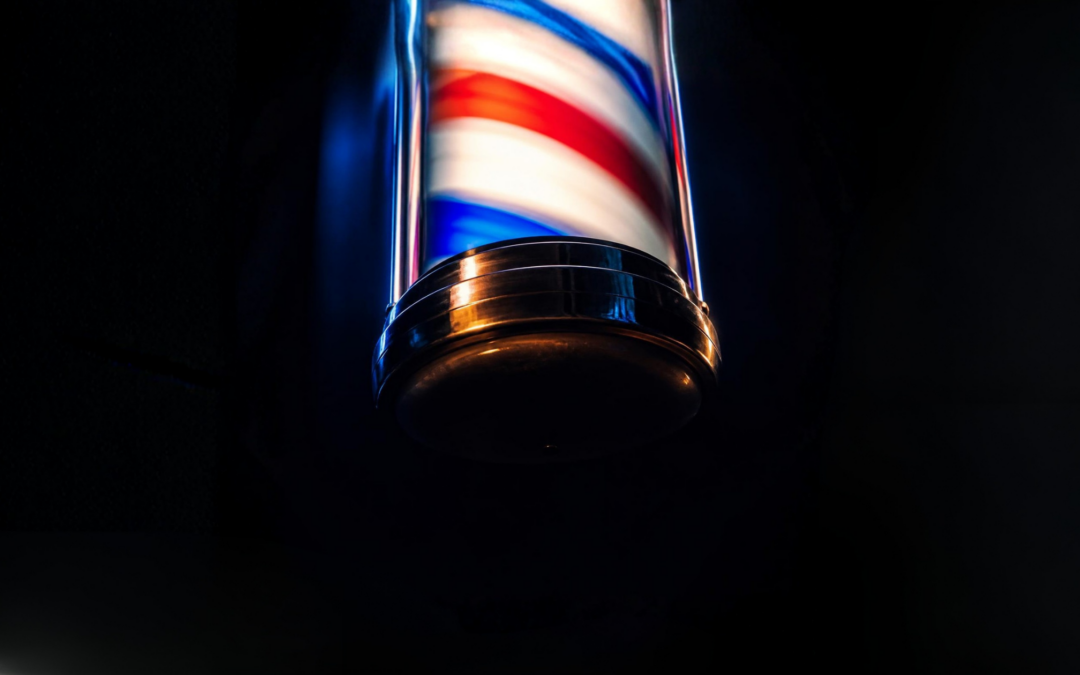
The classic barber pole is a relic of bloodletting: barber pole history meaning ties the red stripe to blood, the white to bandages, and the pole to the staff patients gripped during the procedure, with a basin or leech jar represented by the brass-colored finial.
In the Middle Ages, barbers did far more than haircuts and shaves. They pulled teeth, set broken bones, stitched wounds, and practiced bloodletting on people who believed bad blood caused illness. According to History.com, monks often cared for the sick, and barbers helped because they were skilled with sharp blades.
That changed in 1163, when Pope Alexander III barred clergy from performing bloodletting. The work did not disappear, though. Instead, it moved almost entirely to barbers, who were already used to handling razors. Over time, these “barber-surgeons” became a familiar part of European towns and cities.
One of the most famous was Ambroise Paré, a 16th-century Frenchman often called the father of modern surgery. He began his career as a barber-surgeon, treating soldiers on the battlefield before surgery fully separated from the barbershop.
Barber Pole History Meaning: What the Colors Actually Represent
Once you know the medical backstory, the barber pole’s design stops feeling random. The barber pole history meaning is encoded in each part of the pole. Red represents the blood that flowed during bloodletting. White stands for the clean bandages used to stop the bleeding once the procedure ended.
The pole itself also has a role in this story. Patients were often asked to grip a wooden staff or rod and clench their fist. That made their veins stand out, so the barber could open the right spot more easily. The striped pole you see today is a stylized version of that bloodied staff.
Traditional poles also feature a brass-colored ball or cup at the top. Historical accounts describe basins that held leeches or collected blood during treatment. The finial on modern poles nods to that basin, without spelling out its more unsettling purpose.
Barber Pole History Meaning: Why America Added Blue
If Europe’s traditional poles are red and white, why do many American poles add blue? Here the barber pole history meaning shifts from solid fact into educated guesswork. Reliable sources present two main theories, and neither has been universally proved.
One theory holds that blue represents the veins cut during bloodletting, completing the picture of blood, bandages, and vessels. Another theory, noted in references like Wikipedia’s overview of the barber’s pole, suggests the blue stripe was added in the United States as a patriotic echo of the American flag.
Historians have not found a single definitive document that settles the question. For now, both explanations remain theories rather than confirmed fact.
The Split Between Barbering and Medicine and the Pole’s Survival
By the 1500s and 1600s, barbers and surgeons started to sort themselves into separate professions. In England, barbers and surgeons shared a guild for a time, but surgeons eventually broke away in the 1700s as surgery became more formal and scientific. Across Europe, bloodletting slowly fell out of favor in the 19th century.
Yet the striped pole stayed. Even as barbers focused on grooming instead of surgery, the pole survived as their trade sign, while its original medical meaning faded from public memory. Today’s barbershop, with its fades, shaves, and conversations, looks nothing like a medieval treatment room.
At Career Schools of Texas, students in the Barber program learn the craft in a far safer, cleaner world than those early barber-surgeons ever knew. The familiar pole outside a modern shop in South Dallas, East Dallas, or Houston is a reminder that barbering is not just a service, but a very old, very human story still turning on the sidewalk.