
Is It Bad to Cut Your Own Hair at Home? A Barber Explains
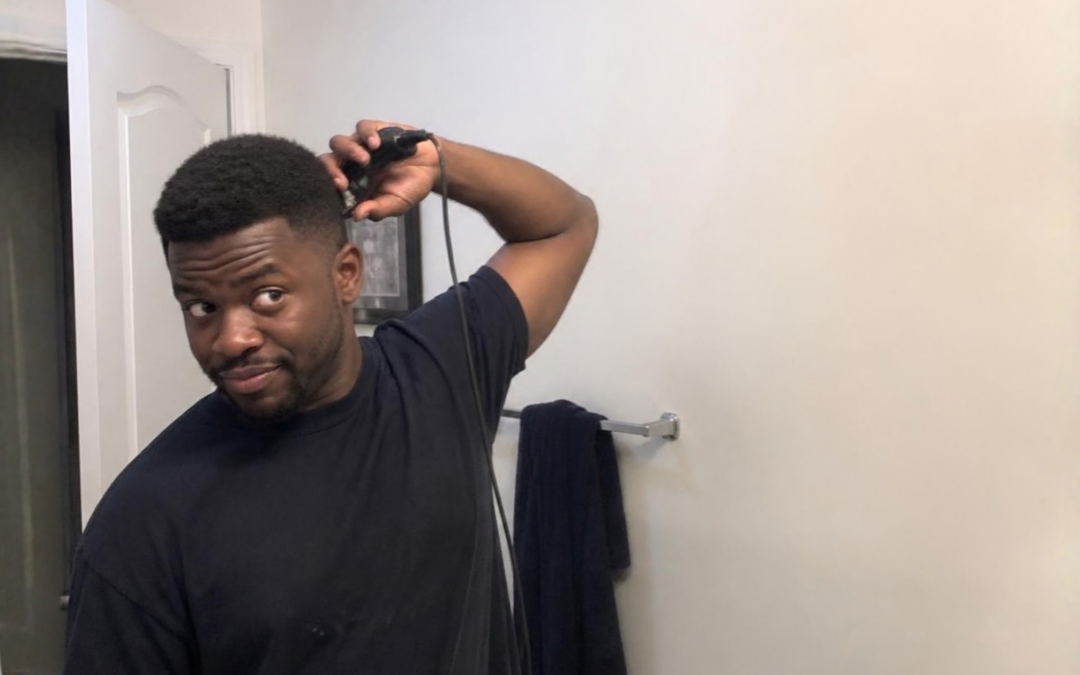
Most people have a story about cutting your own hair at home. Maybe you snipped your own bangs at midnight. Maybe you watched a friend turn a “tiny fix” into an accidental buzzcut. You are not alone, and no, this is not a lecture. Let’s talk honestly about what barbers really think.
What’s Actually Okay When Cutting Your Own Hair at Home
Cutting your own hair at home is not automatically a terrible idea. Treated like light maintenance instead of a full makeover, it can work. Think quick fringe cleanups, a beard shape between appointments, or a tiny neckline tidy so you feel presentable for work or class.
For example, trimming long bangs that already have a shape is usually low risk. You stand in good light, keep the sections small, and cut less than you think. The worst case is slightly short fringe that a pro can easily blend later.
Beard and mustache maintenance fall in the same “pretty safe” zone. You might clean your cheek lines, trim stray hairs on the lip, or even up the bottom line a touch. Similarly, a gentle neckline cleanup on short hair is often fine if you stick close to the natural line and do not create new shapes.
Think of home maintenance as dusting, not renovating. You keep the style a barber already built, rather than designing a brand new one in your bathroom.
The Real Back-of-Head Problem With DIY Haircuts
Everything changes once you reach the back of your head. Even barbers rely on mirrors, angles, and lighting to see what they are doing. At home, the mirror-on-mirror setup flips everything and turns simple moves into confusing, backward motions.
You might feel like your clipper or trimmer is moving straight, but the reflection tells a different story. Small wobbles turn into uneven lines or corners you did not plan. Later, you notice a crooked shelf at the base of your hairline, and fixing it usually means going shorter than you wanted.
This is why many pros say the back is the real danger zone. You cannot clearly see your canvas, so judging length, balance, and symmetry becomes guesswork. If you want to keep cutting your own hair at home, it helps to leave the back shape to a professional whenever you can.
Why Fades Are So Risky to DIY on Your Own Head
A good fade looks simple from the chair, yet it is one of the hardest things to do on yourself. A clean blend relies on consistent clipper angle, steady pressure, and smooth transitions between guard sizes from bottom to top.
On your own head, your arm keeps changing position as you reach around the sides and back. That small angle change makes some passes bite deeper, which creates harsh steps or light patches. You might also rush and start with a guard that is too short, which leaves zero room to fix mistakes.
Professional barbers spend hours practicing how to read the head shape, section the cut, and blend lines away. That technique matters even more when you move into trends like skin fades and tight tapers. If you love fades, treating them as a “barber job” instead of a DIY experiment can save you a lot of hat days.
How to Dodge the DIY Overcorrection Spiral
The most common home-haircut story starts with “It was just a tiny uneven spot.” You take one more pass with the clippers. The line jumps. You go shorter to fix it. Suddenly the whole cut is a guard length or two below what you ever wanted.
That overcorrection spiral is sneaky because it feels logical in the moment. Each small fix seems harmless, yet every pass removes hair you cannot put back. Without a full view of your head, you keep chasing problems that were not visible to anyone else.
Setting a clear stop rule helps. Decide your shortest acceptable length before you start. When you hit that length, you are done, even if a tiny corner annoys you. If anything feels too risky, step away, throw on a cap, and let a barber rescue it tomorrow.
If you are near South Dallas, East Dallas, or the Houston campus and you want to understand what your barber sees, consider training instead of guessing. The Barber program at Career Schools of Texas lets you practice fades, blending, and shaping on proper tools and mannequins, not just your own hair.
Learn about the Barber program | Talk with admissions | Apply now
Phone: (833) 833-2788