
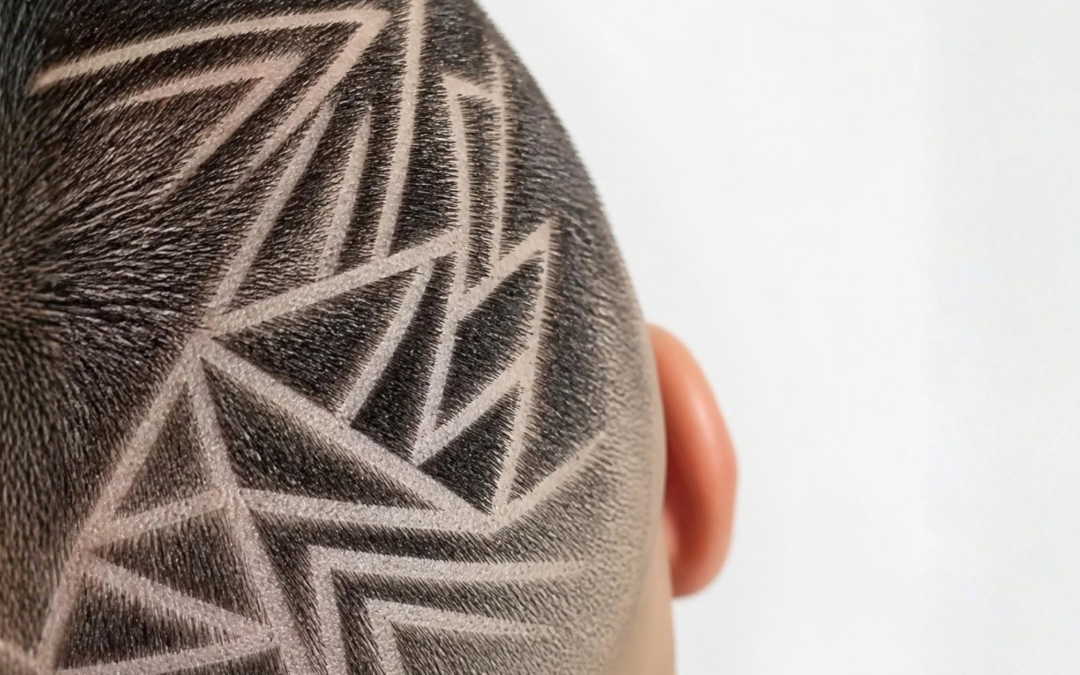
Inside the Hair Design Barber Texas Trend
In hair design barber Texas services, a barber treats the head like a canvas, using clippers, trimmers, and sometimes a straight razor to carve lines, patterns, and images into short hair. The goal is a clean, high contrast design that frames the fade and looks sharp from every angle.
Picture someone turning in the chair and revealing a lightning bolt, star, or flowing pattern cut into a fresh fade. The design almost looks printed on. In reality, it comes from tiny, controlled strokes of detail trimmers and T-blade clippers. Each pass removes just enough hair to create bright lines against darker areas.
First, the barber usually builds a tight base cut, often a fade or taper. That smooth surface makes the design pop. Then the real art begins as the barber sketches the outline with the corner of a trimmer, adjusts symmetry, and slowly cleans the shape. On some designs, a straight razor sharpens edges for extra shine.
Why Hair Design Barber Texas Work Is Harder Than It Looks
From the outside, a design can look like it took a few quick passes. However, most barbers creating detailed work are drawing freehand with no stencil at all. They hold the full picture in their minds and work in reverse, carving away negative space instead of just cutting hair shorter.
Every line matters. A curve that dips too low can change the whole flow of the design. One slip of the wrist can make a line thicker than planned and tough to fix. Because hair grows in different directions, the barber also has to read growth patterns and adjust hand pressure to keep lines clean.
In addition, this craft demands strong spatial reasoning. The barber constantly checks how the design wraps around the head and how it will look from the front, side, and back. That level of control only comes after many repetitions of basic cuts, tapers, and lineups.
From Simple Lines to Complex Freehand Razor Art
Most barbers who love design work do not start with full portraits. Instead, they begin with simple parting lines, double lines along a fade, or small geometric shapes near the temple. These early designs teach balance, spacing, and how much hair to remove for contrast.
As confidence grows, the shapes become more complex. A single curve can branch into layered waves. Triangles and boxes can turn into repeating patterns across the back of the head. With practice, some barbers experiment with abstract art or images inspired by sports, nature, or culture.
On high-detail looks, a straight razor may come in at the end. The razor cleans edges, softens any fuzz left by the clipper, and helps light catch the design. Even then, the most eye-catching results still rest on the same basics: clean tapers, even blends, and steady clipper control.
Building Strong Fundamentals Before Advanced Hair Design
What you see in a finished design is only the surface. Behind every sharp pattern is a barber who first learned to fade, taper, and line up hair with consistency. At Career Schools of Texas, students focus on those fundamentals before they ever attempt complex art.
Through guided practice, future barbers at the South Dallas, East Dallas, and Houston campuses work on clipper control, sectioning, sanitation, and client communication. These skills prepare them to explore advanced services like design work in a safe, professional way if they choose to.
If freehand designs spark your curiosity, a solid education is the best starting point. You can learn more about the hands-on training in the Barber program, talk with the admissions team, or apply now to save your seat.
Learn about the Barber program | Talk with admissions | Apply now
Phone: (833) 833-2788