
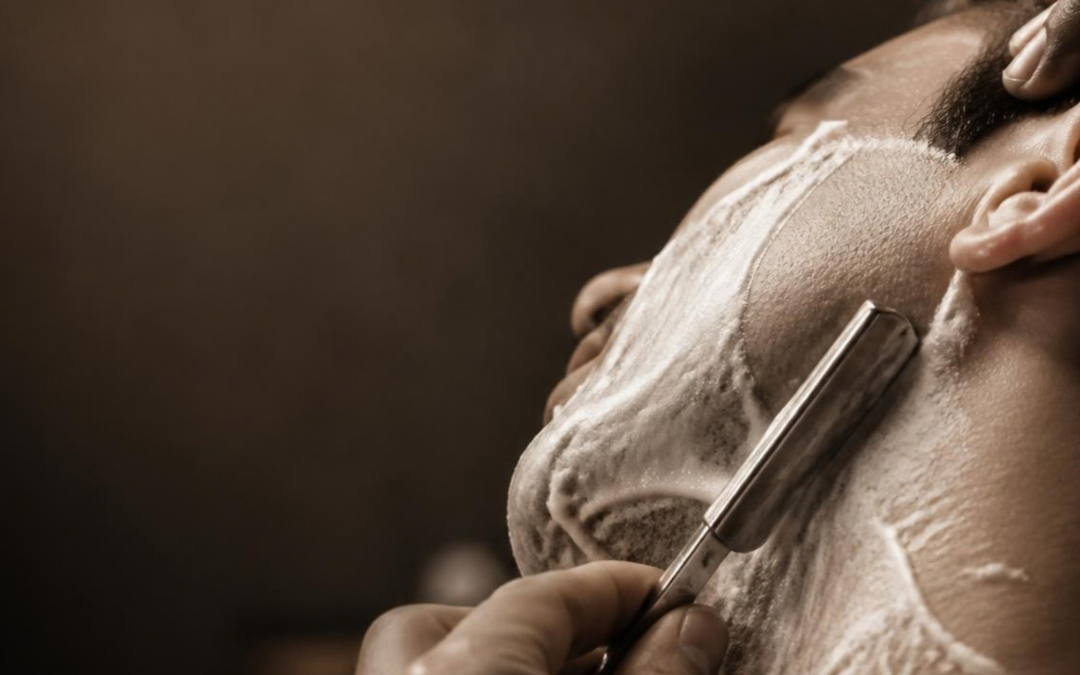
The Straight Razor Shave Texas Barbers Turned Into Ritual
Sink into the chair. A hot towel softens your beard, lather blooms with clean soap, and the room goes quiet except for the whisper of steel. A straight razor shave Texas barbers perform this way is part grooming, part ceremony, and it almost vanished within a single lifetime.
In a classic shop, the cape settles across your shoulders and the barber stretches the skin with one steady hand. The razor glides in short, confident strokes. Every sense is engaged, the sting of aftershave, the steam from the towel, the low murmur of conversation in South Dallas, East Dallas, or Houston. You are not rushing to get out the door. You are submitting to a craft.
For generations, this scene was ordinary. Before plastic handles and buzzing electrics, a sharp piece of steel and a skilled barber were the default tools of daily life. Yet as the twentieth century unfolded, this effortless ritual almost disappeared, pushed aside by convenience, marketing, and war.
Two Centuries When the Straight Razor Ruled the Chair
From the late 1600s onward, folding steel razors became the standard way to remove a beard. Craftsmen in places like Sheffield, England refined the blades until they could hold a hair-splitting edge. According to Wikipedia’s history of the straight razor, these tools dominated everyday shaving for more than two hundred years, well into the twentieth century, before newer razors overtook them.
In that era, a barber’s chair was as important to a neighborhood as the diner or the corner store. Men visited to be shaved, have their hair trimmed, and catch up on news. In Texas, a barbershop on a busy street in Dallas or Houston might keep a rotation of razors for regulars, honing and stropping each blade by hand. The straight razor shave was not a luxury service. It was the default service.
Barbering training reflected that reality. Learning to shave another person’s face safely required control of angle, pressure, and skin tension. For roughly two centuries, if you wanted a close, professional shave, you went to a barber who worked with a straight razor.
How Safety Razors and War Nearly Ended the Barber’s Shave
By the late 1800s, inventors were searching for a safer, simpler way to shave at home. The Kampfe brothers introduced an early safety razor that held a short wedge of straight razor steel behind a guard. Soon after, King C. Gillette popularized the double-edge safety razor with thin, disposable blades that did not need to be honed by hand.
These new tools arrived with aggressive marketing campaigns. Manufacturers promised a clean shave without trips to the barbershop. Instead of paying a professional every few days, men could buy a razor once and replace the blades as needed. For many, especially in growing Texas cities, shaving shifted from a social ritual in a shop to a private chore at the bathroom sink.
World War I accelerated the change. Soldiers needed clean-shaven faces so their gas masks would seal properly, so militaries issued personal razors and taught young men to shave themselves. After the war, those men brought the habit home. Electric razors joined the shelves by the mid-twentieth century, offering even more speed.
The Numbers Behind the Decline
The shift from barbershop shave to home shave was not just cultural. It was financial. According to an estimate from New York barber and shaving historian Charles de Zemler, cited in Wikipedia’s overview of shaving history, barbers’ income from shaves fell from about half of a typical shop’s revenue around the time of the Spanish-American War to roughly a tenth by 1939.
De Zemler’s figures are not a precise census, but they capture the scale of change. In a single generation, shaving shifted from a core service that kept many barbershop doors open to a specialty add-on.
Why the Ritual Is Returning
Yet the story did not end with disposables and electrics. Over the past couple of decades, straight razors and traditional wet shaving have quietly returned. Online communities swap tips about honing stones, boar bristle brushes, and old-style soaps, and traditional razor manufacturers that once served a shrinking niche have found renewed demand from wet shaving enthusiasts. In Texas, you can walk into a modern shop, hear hip hop or country over the speakers, and still see a barber lay out a strop and a gleaming blade for a hot towel shave.
People are looking for more than speed. A straight razor shave invites you to slow down, trust a professional, and experience the craft up close. Many guests describe the hot towels, careful strokes, and lingering aftershave as the most relaxing part of their month.
For barbers, this revival is a chance to reclaim a core skill. At Career Schools of Texas, students in the Barber program still learn traditional shaving techniques along with modern fades, skin care, and strict safety and sanitation. In class and on the clinic floor in South Dallas, East Dallas, and Houston, they practice how to map beard growth, stretch the skin correctly, and respect the razor.
If the idea of offering a signature straight razor shave Texas guests will remember excites you, the admissions team can talk through upcoming start dates.
Learn about the Barber program | Talk with admissions | Apply now
Phone: (833) 833-2788