
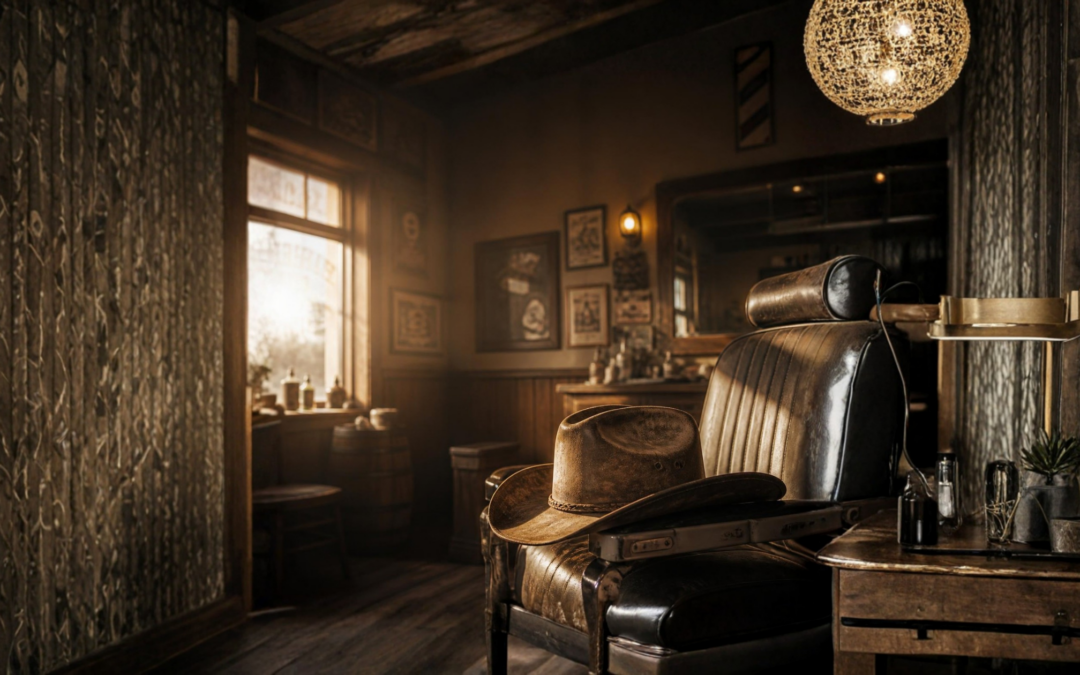
The Practical Roots of Texas Western Barbershop Style
Texas western barbershop style grows from real trail life, not just movie posters. Cowboys spent long days in sun, wind, and dust, so many kept fuller moustaches and beards to shield skin, trap grit, and soften glare, then later shaped those rugged looks into recognizable styles.
On the open range, grooming had to earn its keep. Water could be scarce, mirrors were rare, and workdays stretched from first light to dark. A thick moustache acted like a small filter, catching dust before it hit the mouth. It also helped protect cracked lips from harsh sun and wind.
Over time, small choices about trimming or combing that practical moustache started to matter. Riders might lift the ends to keep hair out of the way of coffee mugs or trail rations. They might train the growth so it sat neatly over the lip rather than hanging into food. Little by little, those tweaks turned necessity into a distinct look.
In Texas, that mix of function and pride still feels familiar. People work outdoors in heat, dust, and bright light, just like the cowboys before them. Today’s Texas western barbershop style honors that history by keeping the moustache and beard bold, but shaped and detailed with far more precision.
Buffalo Bill, the Wild West, and the Handlebar Image
When many people picture a classic Western moustache, Buffalo Bill Cody often comes to mind. His portraits show a sweeping handlebar moustache and long hair, framed by frontier clothing. Through his traveling Wild West show, that image reached audiences across the United States and Europe.
Historians note that the handlebar was already a known style in the late 1800s, appearing in photographs of soldiers, politicians, and other Wild West figures. Cody stood out because he turned that existing style into a performance-ready trademark that crowds instantly recognized.
According to a grooming-focused profile on his look, Cody’s identity and moustache were tightly linked. Posters, programs, and publicity photos repeated the same curled silhouette again and again. As a result, the handlebar became shorthand for frontier courage, trick riding, and show-ring drama.
That connection still shapes expectations in the chair. When someone walks into a Texas shop asking for a bold Western moustache, they often hold a mental picture that looks a lot like Cody. Modern barbers translate that theatrical image into something that works with real jobs, face shapes, and lifestyles.
The Mustache Family Tree Behind Texas Western Barbershop Style
Western grooming is not just one moustache. Instead, it is more like a family tree. Several distinct shapes appear again and again in old photos and modern barbershop requests, each with its own story and era.
The handlebar sits at one branch. This style features long ends that curl upward, usually helped along with wax and careful combing. It showed up on 19th-century soldiers and showmen and still signals flair and attention to detail. In a Texas chair, it often pairs with a sharp fade or neatly cropped hair.
Another branch is the horseshoe. This moustache runs down the sides of the mouth to the jawline, leaving the chin bare. In practice, it demands steady clipper work to keep the vertical lines even and the interior clean.
Then there is the walrus moustache, heavy and full, hanging over the upper lip. Today, a Texas barber might soften it for comfort, trimming just enough so speech and eating stay easy while the bulk remains impressive.
Finally, the chevron offers a more subtle nod to the West. This thick, straight moustache covers the upper lip without curls or drops. Combined with a short beard or clean shave, it gives clients a low-maintenance entry point into Texas western barbershop style.
Texas Western Barbershop Style in Today’s Texas Shops
Walk into a barbershop in South Dallas, East Dallas, or Houston and Western influence still shows up. Clients reference old movie cowboys, country musicians, and family photos from ranch life. They may not know the names of each moustache, but they know the feeling they want.
Today’s Texas western barbershop style balances heritage and polish. Barbers map cheek lines, carve clean necklines, and blend sideburns into fades while preserving that bold Western silhouette. Good work here is precise: one uneven line can change a handlebar into something entirely different.
Because facial hair grows in different directions, shaping these styles takes more than clippers. Skilled barbers combine trimmers, shears, razors, and styling products to control bulk and guide growth.
At Career Schools of Texas, future barbers study these techniques in a structured way. Through the hands-on Barber program, students practice classic shaves, beard design, and moustache detailing, right alongside modern cuts. They learn how to listen to a client’s Western style story and translate it into a cut that fits real life.
If this world of history, grooming, and Texas pride speaks to you, there is a clear next step.
Learn about the Barber program | Talk with admissions | Apply now
Phone: (833) 833-2788